Portfolio
Links
Built With
Description
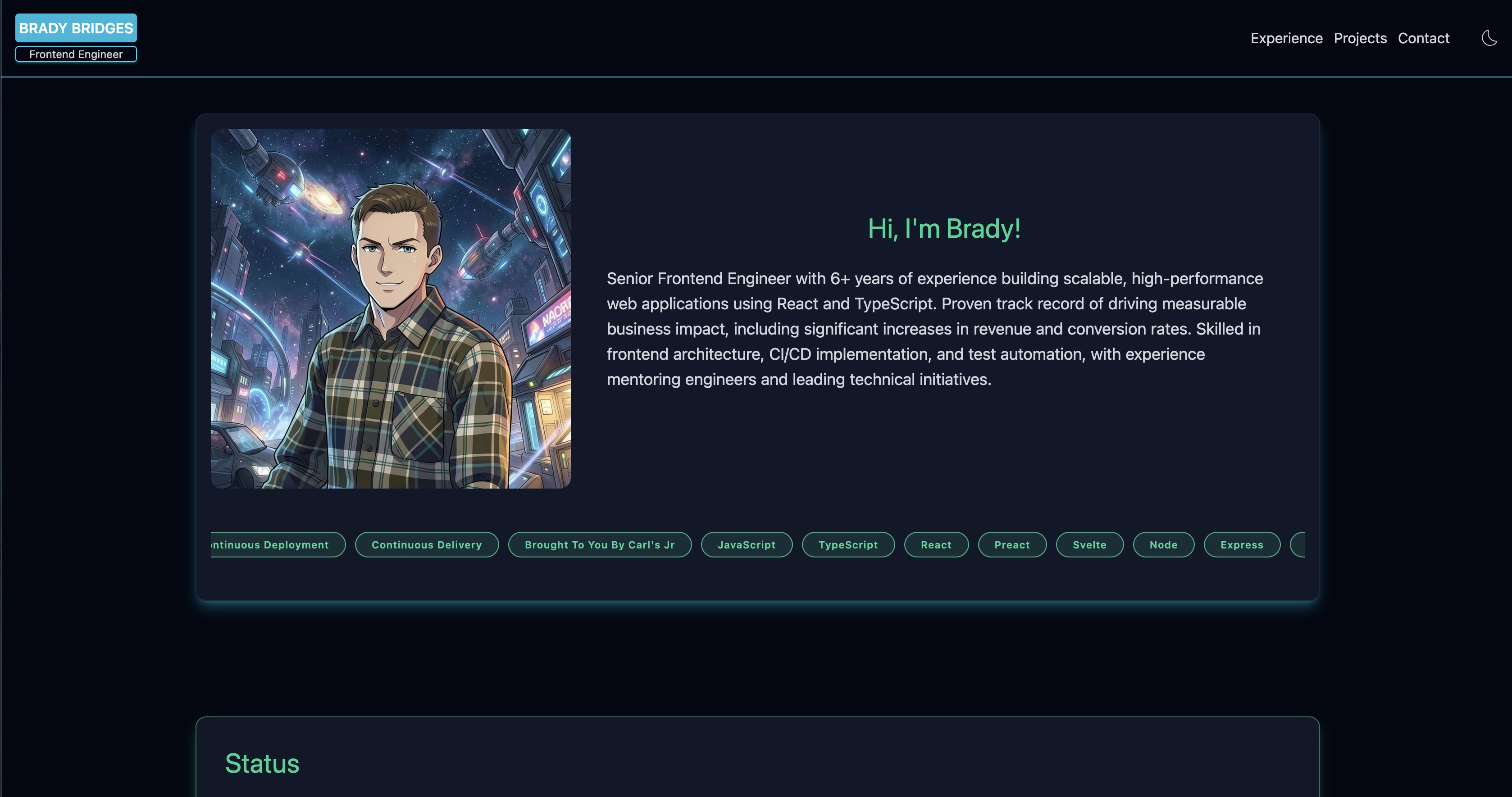
The site you are looking at right now. A fast, statically-typed portfolio built with SvelteKit and Svelte 5 runes, styled with TailwindCSS v4, and deployed as a Node.js server. Features a dynamic project detail system, a working contact form, and Cloudinary-hosted imagery, all without a CMS or database. Deployed on a VPS(hetzner) that I configured from scratch. Coolify handles building and deploying updates to the site whenever a change is merged to the production branch.
Motivation
I've been hearing more and more about SvelteKit and have wanted to take it for a spin. I have also been putting off making a portfolio site for several years. I figured, what better time than now to make one? As a developer who works with React primarily, I find it valuable to stay up to speed with other modern frameworks to see how common patterns like reactivity, routing, SSR, state and side-effects are handled. In order to know what the best tool for a job is, you have to use different tools to gain expertise and insight into their practical applications. I had fun with this project, as you may find, and will definitely be adding Svelte to toolbox. Throughout this project, I found Svelte to be a great option with several advantageous qualities when stacked up against React.
Technical Challenge
The project is built on SvelteKit with Svelte 5 runes mode enforced project-wide, which means every reactive value is explicit and the component model is predictable. TailwindCSS v4 is configured through the Vite plugin rather than a config file, which keeps the toolchain lean. The project detail pages are driven by a single static TypeScript array in `src/lib/projects.ts`: SvelteKit's file-based routing resolves each slug at build time, and the server load function throws a 404 for any slug that doesn't match. The contact form is handled by a SvelteKit form action on the same route, keeping the form POST behavior native and progressively enhanced. Images are hosted on Cloudinary and referenced through a small utility that constructs URLs from public IDs, which means swapping delivery settings or transformations is a one-line change. In the future I may configure a CMS for content and add blogs, but for now static files are serving their purpose.